Kenya · East Africa
The Maasai Mara National Reserve
Kenya's most iconic wildlife destination — home to the Great Migration, the Big Five and the world's finest Big Cat viewing
The Maasai Mara National Reserve is widely held as the most famous wildlife reserve in the world and Kenya's premier safari destination. Located in south-west Kenya, it forms part of the greater Serengeti-Mara ecosystem — one of Africa's most extraordinary wildlife corridors. The reserve covers 1,510 km² of gently rolling African savannah, dotted with acacia trees and bisected by the Mara and Talek rivers.
The Mara is world-renowned for its spectacular natural diversity of wildlife and for hosting the Great Wildebeest Migration — one of the most dramatic natural events on earth. Between July and October, 1.5 million wildebeest and 200,000 zebra cross the Mara River in thundering, chaotic river crossings, pursued by massive Nile crocodiles. Large numbers of lions, cheetah, elephant, rhino, buffalo, wildebeest, giraffe, zebra and many more animals are found here year-round in their natural habitat, free to roam the vast Kenyan wilderness.
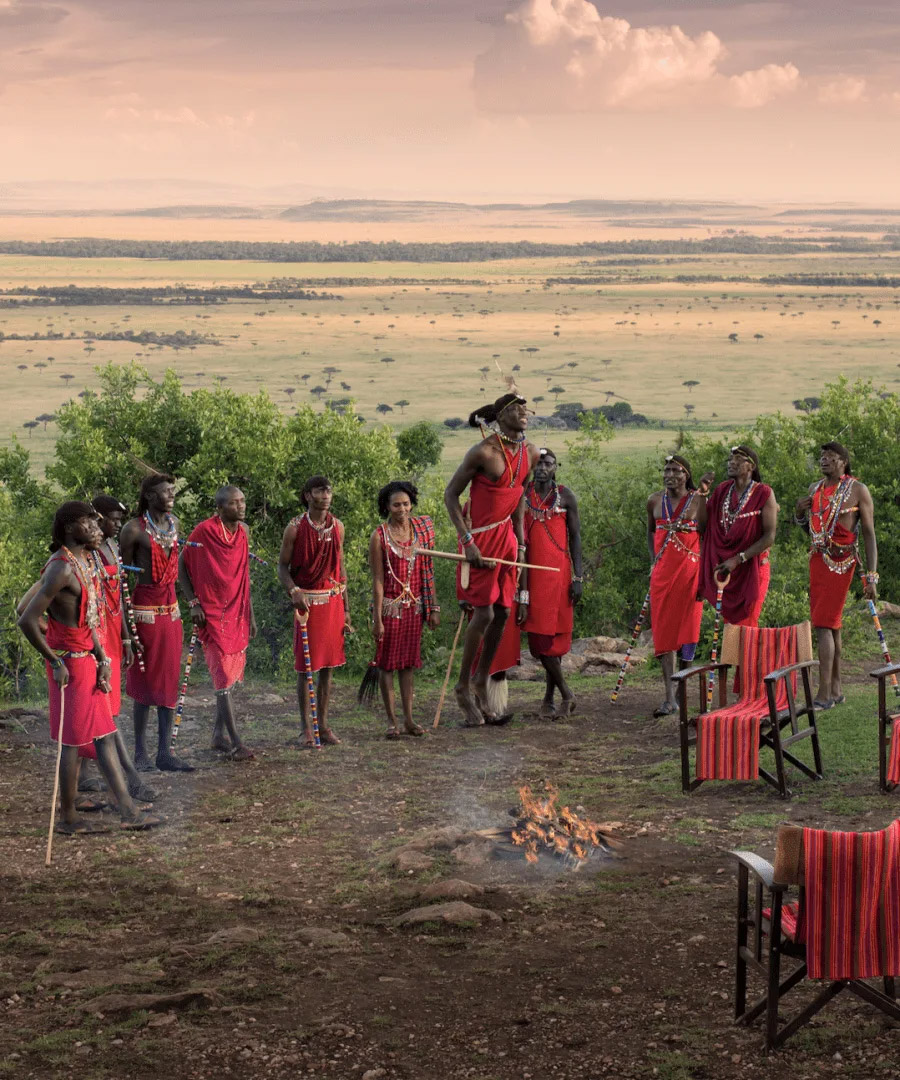
The Mara is also home to the Maasai people — one of Africa's most iconic cultures. Visiting a traditional Maasai village, learning about their warrior traditions and purchasing handcrafted beadwork directly from the community is a highlight for many visitors. Private conservancies surrounding the reserve offer additional exclusivity: night drives, off-road driving and walking safaris not permitted in the main reserve.
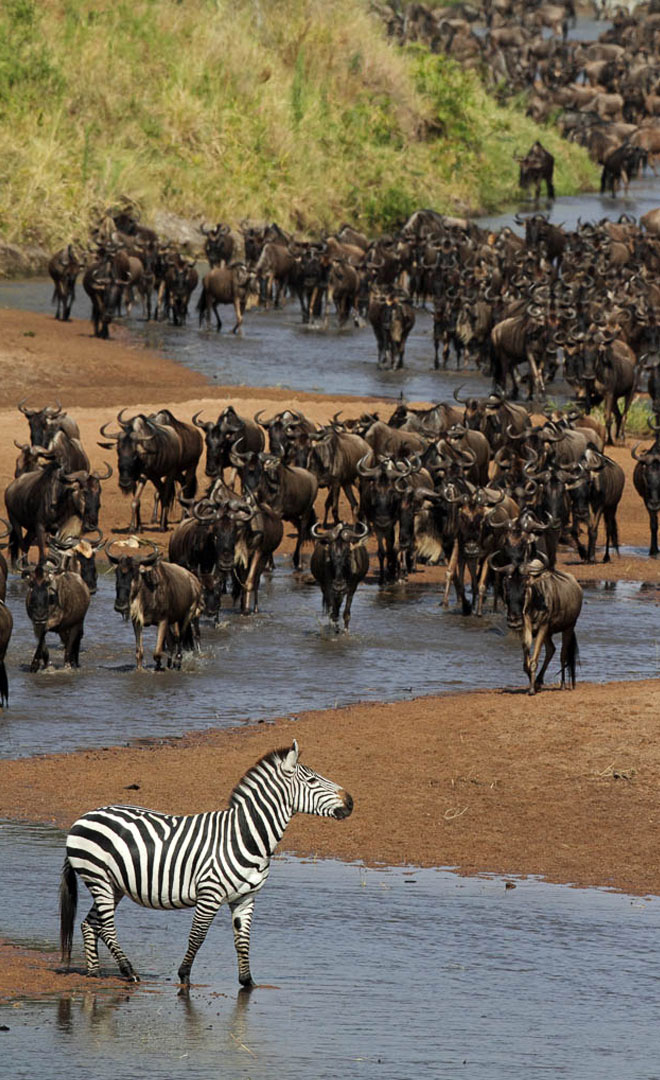
July to October: 1.5 million wildebeest cross the Mara River in the world's greatest wildlife spectacle. The crossings at Musiara and Lookout Hill are the most dramatic.
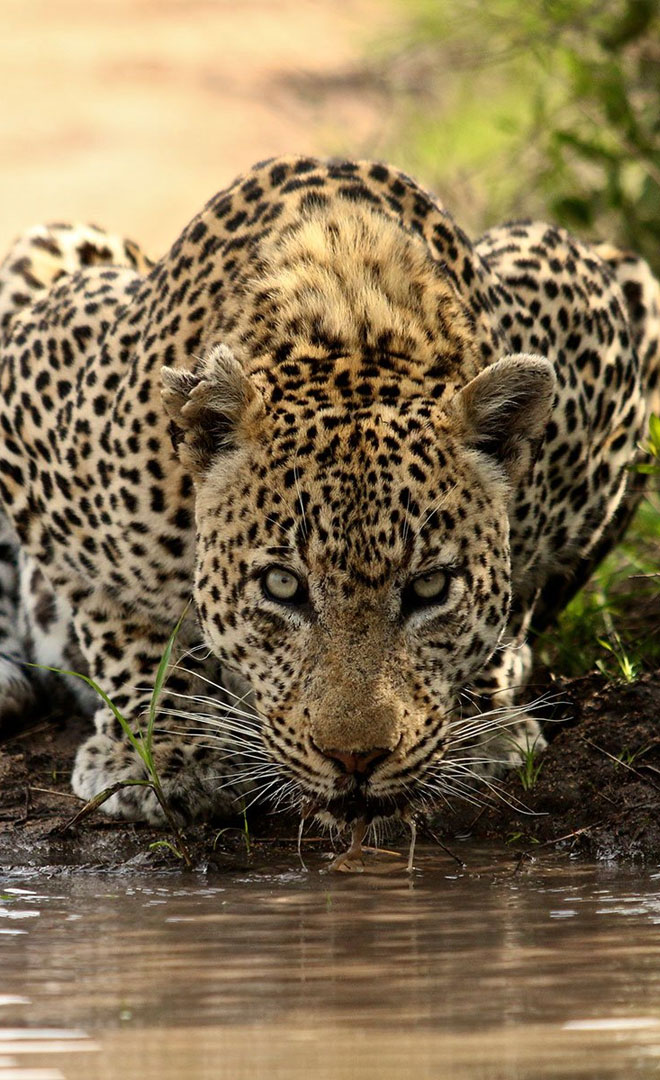
The Mara has Africa's densest lion population. Resident cheetah coalitions, leopards along the Talek River and occasional serval sightings make the Mara a big cat paradise.
Float silently over the golden plains at dawn — one of Africa's most iconic and unforgettable experiences. A champagne bush breakfast follows landing.
Visit a traditional Maasai village, watch the warrior jumping ceremony and learn about one of Africa's most fascinating and resilient cultures.
The Great Migration river crossings and peak Big Five action. Dry, cool and ideal game viewing conditions. Book 6–12 months in advance.
Quieter, lush landscape and newborn animals everywhere. Excellent cheetah and lion hunting activity. Fewer vehicles.
Short rains bring fresh grass. Excellent bird watching. Reduced rates and fewer visitors.
Wettest period — some lodges close. Not recommended for first-time visitors.