Tanzania · East Africa
The Serengeti National Park
The world's greatest wildlife spectacle — 1.5 million wildebeest, legendary predators and the endless plains that inspired the word safari
The Serengeti National Park is Tanzania's most famous and most visited wildlife destination — and one of the great wonders of the natural world. Spanning 14,763 km², it is one of Africa's largest national parks and forms part of the greater Serengeti-Mara ecosystem that extends into Kenya's Maasai Mara.
The Serengeti is most famous for the Great Wildebeest Migration — the largest overland animal movement on earth, in which 1.5 million wildebeest and 200,000 zebra travel in a continuous circle through the ecosystem in search of fresh grass. But the Serengeti is extraordinary year-round: the central Seronera region hosts some of the highest predator densities anywhere in Africa, with resident lion prides, leopards in the sausage trees, cheetah families on the open plain and wild dogs passing through.
The park encompasses several distinct ecosystems — the short-grass southern plains (where calving occurs January–February), the long-grass central plains, the wooded Seronera valley, the western corridor (Grumeti River crossings in May–June) and the dramatic northern Kogatende region (Mara River crossings July–October). Expert guidance and well-positioned camps allow guests to experience whichever aspect of the migration is most active during their visit.
1.5 million wildebeest and 200,000 zebra follow the rains in a continuous circle through the ecosystem — the greatest wildlife spectacle on earth, witnessed in different forms year-round.
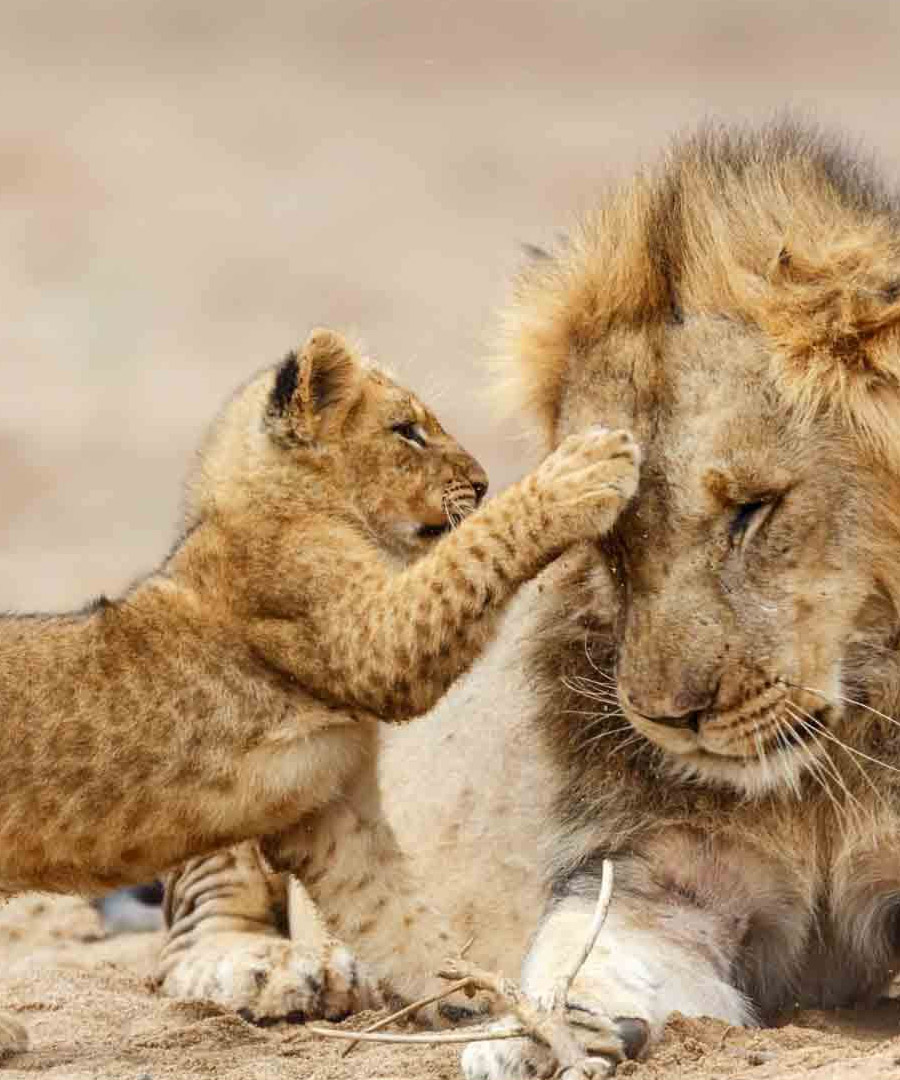
The Seronera region has one of the highest predator densities in Africa — lion prides, leopards in sausage trees, cheetah families and wild dog packs all in a compact area.
Drift silently over the golden plains at dawn as the sun rises and the herds scatter below — a pre-dawn champagne breakfast follows landing on the plain.
January–February in the southern Serengeti: 8,000 wildebeest calves born daily — and every predator in the ecosystem is there to meet them. Extraordinary wildlife drama.
Mara River crossings in the north — the most dramatic phase of the migration. Peak predator action. Dry and excellent game viewing.
8,000 wildebeest calves born daily in the south. Cheetah, lion and hyena hunting at peak intensity.
Grumeti River crossings — less visited but equally dramatic. Excellent value.
Heavy rains. Lush landscapes. Fewer visitors and lower rates. Resident predators still active.